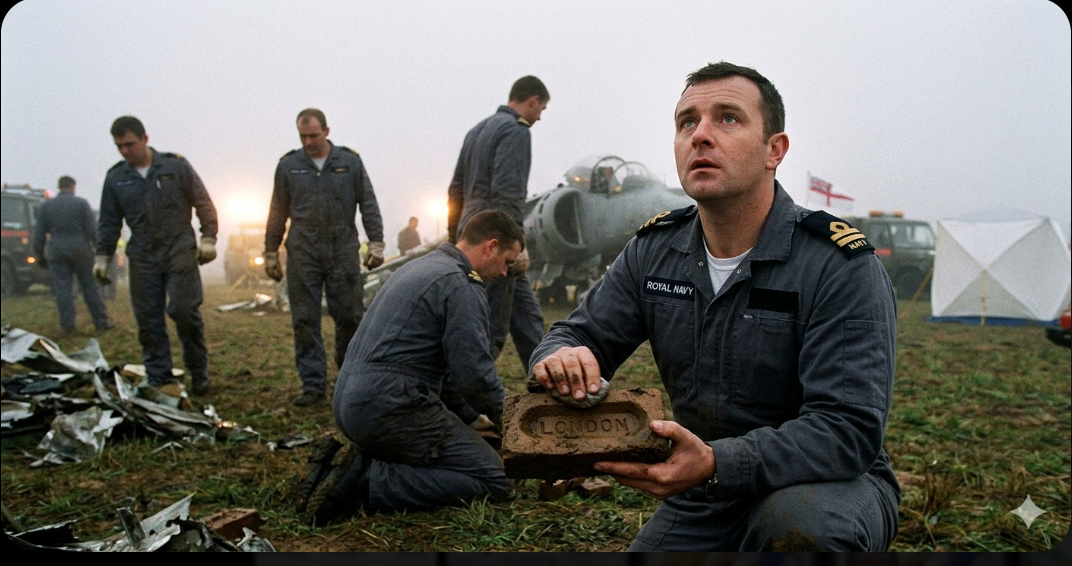
Sea King helicopters had been my life since 1976. By the turn of the century, I had lived every inch of the "Flying Elephant." From my start as a Junior Naval Air Mechanic on 706 Squadron to serving as a lad on HMS Hermes (814 NAS) in 1977, later as a Chief Petty Officer on that same Culdrose based 814 Squadron and then out of the blue came RNAS Prestwick or "Planet Gannet" as we called it. There I became a Charge Chief Petty Officer (Senior Maintenance Rating) on 826 A-Flight, I knew the airframes and the people inside out. I’d done my time at the navy 'Stone bases' RNAS Culdrose, and HMS Gannet where I navigated Engineering skills and navigated the rigours of Quality Assurance at the SAR Squadron 819 before being promoted to lead 826 A Flight or Chatham Flight as it was called.
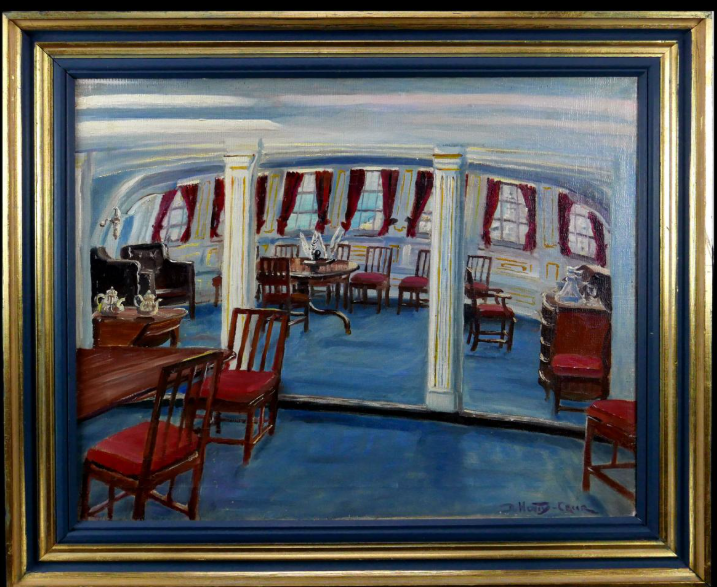
Now maybe I have told some stories around these times, so I wont go over old ground but in the Royal Navy, you are surrounded by ghosts of greatness. In 2002, I was "dined out" in Nelson’s cabin aboard HMS Victory - a surreal, humbling experience to mark receiving my Meritorious Service Medal (MSM). After 25 years of service, I felt I had reached the top of my game. The Day and Dining Cabins were part of Admiral Lord Nelson’s Great Cabin complex aboard the flagship. The Day Cabin was partitioned off from the Dining Cabin where Nelson met with captains of the Mediterranean Fleet on his 58th birthday, 29 September 1805, to ensure they fully understood how he expected them to fight and defeat the Combined Fleets of France and Spain.
But in 2003, the Service had a new challenge for me. I was leaving the Mobile Aircraft Support Unit (MASU) at Fleetlands and my beloved helicopters behind. I was appointed as the Warrant Officer in charge of the Harrier Deep Maintenance Unit at RNAS Yeovilton—HMS Heron.
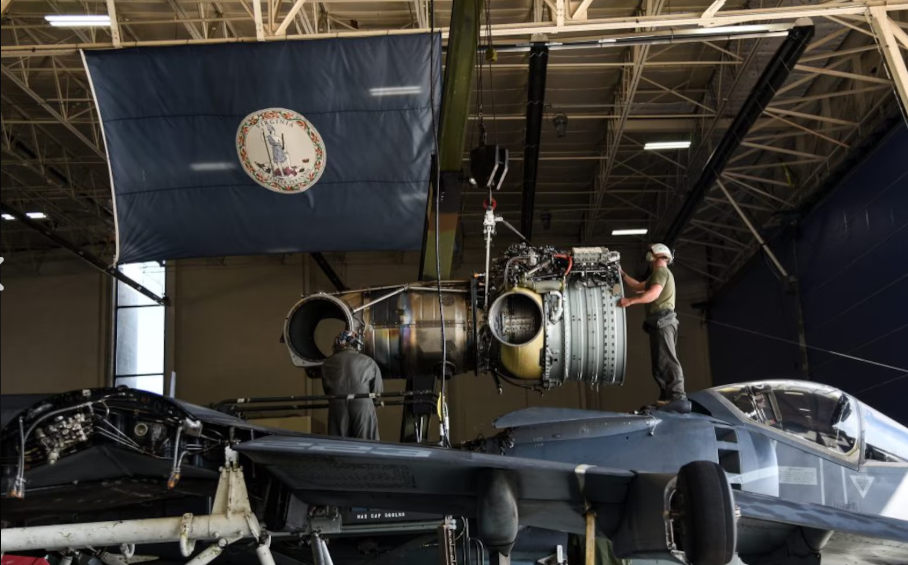
I walked into a community that was not only grieving but deeply unsettled. This was the era of Joint Force Harrier. The legendary Sea Harrier was being phased out to make way for the RAF-led GR7 and GR9 squadrons. To my team at Heron, this transition felt like a loss of identity. They weren't just fixing planes; they were guarding the final days of a uniquely naval heritage, and the move toward RAF Wittering and "Light Blue" oversight was a bitter pill to swallow.
Amidst this professional upheaval was a deep, personal wound: the death of Lieutenant Commander Martin "Jack" London.
Jack was the "instructor’s instructor," a man who had mastered the Harrier’s notoriously difficult V/STOL physics. To the maintainers, he was the heart of the fleet. The story of his final flight on August 5, 2002, hung over the hangar like a shroud. Jack had been in a twin-seat T10 out of RAF Wittering with a student, Lieutenant Nathan Gray. Shortly after take off, a catastrophic mechanical failure in the Pegasus engine left them with no time and no altitude.
Both ejected. Gray survived the harrowing sequence, but Jack’s parachute never had the chance to deploy. He was gone.
My new team had just returned from his funeral when I arrived. They were "Heron" men and women through and through, and they told me a story from the crash site 'clean up' that defied every technical manual I’d ever read.
The recovery was taking place near the Cambridgeshire border. The air was unnaturally heavy, and a thick, strange mist had settled over the grass. As the lads worked through the grim task of recovering the shattered remains of the T10, one of them spotted something that didn't belong to an aircraft.
It was a single, weathered clay brick resting at the edge of the impact area.
When the sailor picked it up and turned it over, the chatter stopped. Stamped into the "frog" of the brick—the deep indentation used by the manufacturer—was a single word in bold, embossed letters: **LONDON**.
Technically, it was a product of the London Brick Company (LBC), common enough across the Midlands and the UK. But in that moment, in that mist, at the exact coordinate where a legend had fallen, the logic of the "common brick" vanished. It felt like a signature. It felt like Jack was still there, standing watch over the debris of his final ride.
For a team that felt their history was being erased by departmental mergers and the "historic reference" of the Sea Harrier, that brick was more than a coincidence. It was a sign that their heritage, and the man who embodied it, couldn't be so easily cleared away.
Jack London is remembered today as a "pilot’s pilot." His student, Nathan Gray, went on to make history with the first-ever F-35B landing on HMS Queen Elizabeth, forever crediting Jack’s final actions with his survival.
We dealt in engineering and hard facts in the Fleet Air Arm. But sometimes, the most important things we find aren't listed on a manifest. For the men at Yeovilton, that brick was a final, silent salute from a commander who wasn't ready to leave his post.
Career and Accolades
- Service Record: Served for 24 years, accumulating over 5,000 flying hours in helicopters and fast jets.
- Operational Duty: Flew over the former Yugoslavia (1995), Iraq (1998), and Sierra Leone (2000).
- 1998 Bravery Award: While flying a Sea Harrier F/A.2 over the Gulf of Aden, the canopy shattered at 40,000 ft. Despite the cockpit filling with debris, rapid decompression, and temperatures of -60∘C he managed to land the aircraft safely, describing the experience as "like driving an open-top sports car at 300mph".
- Distinction: He was described by the Ministry of Defence as the Royal Navy's most experienced serving Sea Harrier pilot.
- Commander London was originally from Cornwall and had one child.
Poem
"For the Fallen" by Laurence Binyon
They shall grow not old, as we that are left grow old:
Age shall not weary them, nor the years condemn.
At the going down of the sun and in the morning
We will remember them.
In the quiet of the Yeovilton hangars, when the wind catches the corrugated steel, we still hear the roar of the Pegasus—and we remember.