With my new book now published on Amazon—Catching the Wave: From the Royal Navy to Civvy Street —many of my readers first experienced my ramblings through my regular monthly blogs. A Memoir of High Seas and Everyday Life—The book moves through my life inside and outside the Royal Navy, from the age of 16 exploring the shift into the corporate world in my mid forties then getting older, and facing retirement recovering from a prostate cancer diagnosis and Prostatectomy in 2023 I started my poetry blog articles.
While the book captures the emotional journey and personal milestones, I didn't write as much about the actual places I visited along the way. That is where this new blog series, 'Riding the Tide', comes in. Here, I want to explore those locations—from global naval ports, inclduing my personal experiences and what they were like then and now to the places across the UK where I have lived and visited over six decades—by researching what they were like then, what they have become now, and tying them back to the poetry and memories that defined those years and who knows, this might inspire a second book.
Which brings me back to where it all started: January 1976.
Riding the Tide - A Potential Chapter 1
In 1976, I was sixteen years old, wearing a uniform that felt a little too big and carrying the weight of a world I’d barely begun to understand. Ipswich wasn’t the sleek university marina of trendy coffee shops and waterfront apartments it is today; it was a gritty, working county town smelling of diesel, grain silos, and malt from the docks. To the locals, we were simply the "Ganges boys"—hordes of disciplined teenagers pouring off buses into the town center on rare hours of liberty, desperately seeking a seat at the Gaumont Cinema or a quiet booth in a greasy-spoon cafe.
Looking back now, through the lens of six decades, a corporate career, and surviving prostate cancer in 2023, I realise 1976 was a turning point for my life before I caught the wave. It was the year HMS Ganges closed its gates forever, and the year my own long voyage into the world truly began.
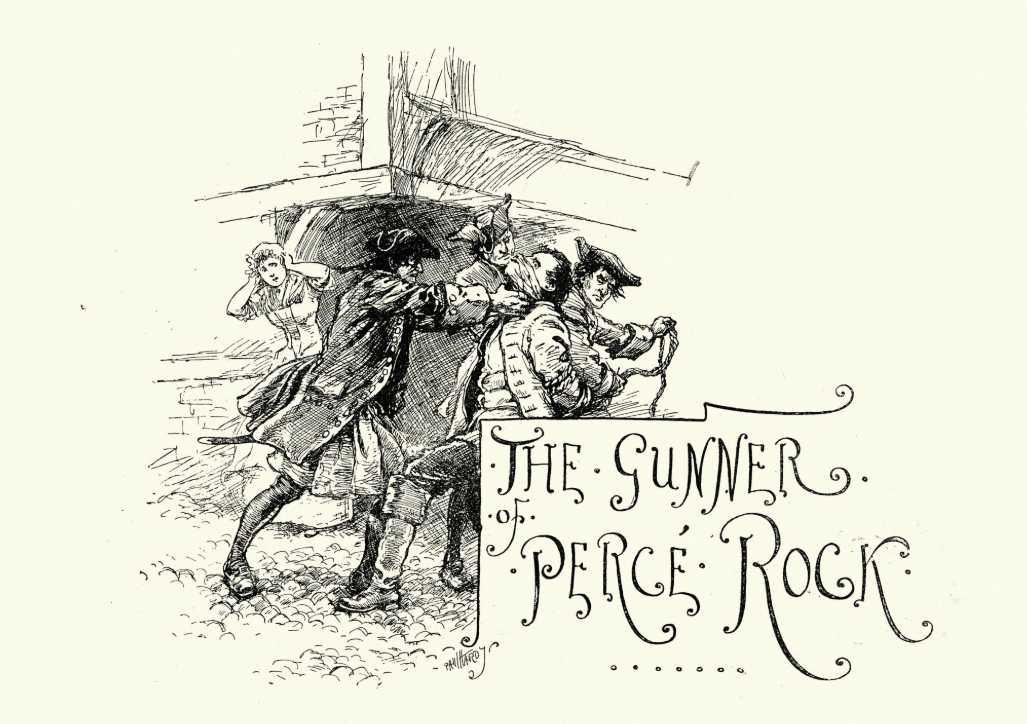
Just before I joined "the Andrew"—the traditional lower-deck nickname for the Royal Navy, named after Andrew Miller, a ruthless 18th-century press-gang officer who pressed so many men into service it was joked the Navy was his private property—on January 13th, the UK was hit on January 2nd–3rd by the Great Gale of 1976. It was one of the most violent storms to strike East Anglia in the 20th century, with 100 mph winds sweeping across the region, tearing down roofs, uprooting trees, and whipping up huge storm surges along the Suffolk coast. When I arrived ten days later, the peninsula was still clearing up the wreckage.
By late January, the weather turned violently cold. Heavy snow swept across East Anglia, and temperatures plummeted to -10°C. That sudden arctic blast brought bitter, severe frosts that hit us young recruits on early-morning parade grounds like a physical punch. Those early days are a distant memory now, but I had landed in a cold, hard environment as Junior Naval Air Mechanic Taylor (D156151E).
The historic base was full of Iranian sailors who picked up English well, although their greeting was a little odd: "Hello, shit!" I know now it was the generations of cheeky recruits before me who had thoughtfully educated them in local swear words and derogatory phrases.
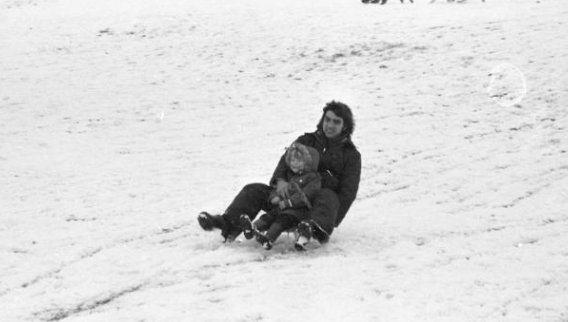
For a sixteen-year-old lad fresh out of West London, the culture shock was absolute. But whenever we were granted those precious few hours of shore leave, we would leave the freezing winds of the Shotley Peninsula behind and head straight for Ipswich town center.
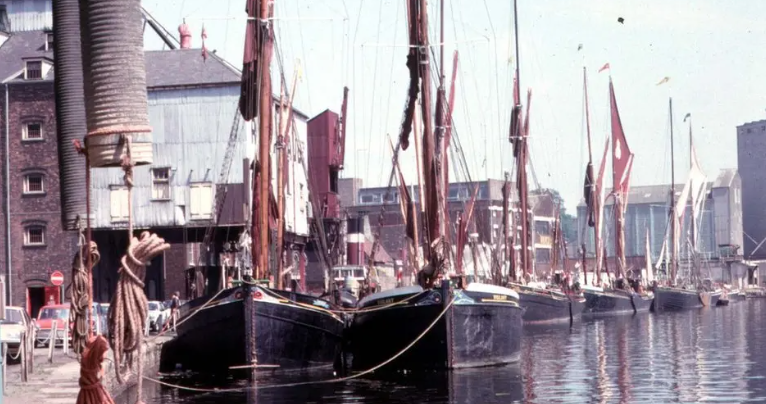
Back in 1976, Ipswich wasn't a leisure destination—it was a bustling, hard-working town. The Wet Dock was full of heavy cargo ships, and the air carried the rich, heavy scents of the Pauls & Whites maltings and the Cliff Quay power station. But to us, it was pure freedom. We’d pile off the buses in our best uniforms, heading straight for the warmth of the Gaumont Cinema on St. Helen’s Street or crowding into local cafes to fill up on fry-ups and tea. The locals always treated us well; there was a quiet respect, and perhaps a bit of sympathy, for the hundreds of young lads enduring the notorious regime down at Shotley.
By March, the severe winter frosts finally broke, giving way to bright, clear spring sunshine on the day I passed out. I was lucky to only do six weeks of basic training. Previously, 15-year-old "Junior Seamen" spent a grueling 18 months to two years at Ganges under a fierce regime of physical labor, endless drill, seamanship, and climbing the iconic 143-foot mast.
In those early days, the ultimate honor was being chosen as the "Button Boy"—a single recruit selected for his nerve to climb to the absolute peak, step out onto a narrow 12-inch wooden disk at the summit, and stand barefoot at attention 143 feet in the air without a safety net while ceremonial divisions were inspected below. By my time in 1976, however, those terrifying displays were history. The mast had been declared unsafe and stood strictly out of bounds—a towering, silent monument to a bygone era above our six-week intake.
In the minds of those older Ganges boys who endured that full 18-month stay, our fast-track intake were dismissively known as "six-week wonders." Before 1973, when fast-track basic training came into play, those "old salts" experienced intense seamanship and gunnery under a notoriously tough, some might say bullying, old-school regime.
Through recent research, the darker side of that institutional history has come to light. Officially, the base relied on severe corporal punishment—such as being caned over the vaulting horse—and public humiliation for trivial infractions. Unofficially, senior boys and instructors often subjected new recruits to brutal hazing rituals and physical violence behind closed doors, disguised as "character building." In recent years, as former recruits have spoken out, stories of systemic bullying and institutional abuse that went unchecked for generations have surfaced. By 1976, the Navy was modernizing, and our intake was a very different beast. Yet, even in its final months, you could still feel the weight of those tough decades lingering in the cold coastal air.
Later that year, in October 1976, Prince Philip took the final salute at HMS Ganges, closing its gates forever and ending seventy years of naval history.
Looking at Ipswich today via satellite maps and modern local news, that gritty industrial landscape has vanished. The working docks where grain and timber were loaded have been transformed into the vibrant Ipswich Waterfront, packed with university buildings, luxury apartments, and modern restaurants. The old base at Shotley, once defined by the loom of the mast and the bark of drill instructors, is being redeveloped into housing.
It’s strange to think that the place where my Navy life began—where I learned to swim better and step into adulthood—is now a quiet residential community. The physical landmarks of 1976 have faded or shifted into new lives, much like I did when I eventually traded my uniform for a corporate suit in 2006, and later, faced down cancer in 2023.
Yet in my mind, the sound of the gale whipping off the River Stour and the sight of a sea of blue uniforms filling the Ipswich streets remain as sharp as ever.
POEM – Riding the Tide
Thinking, drinking in, a life gone by
I often ask myself the reason why
I joined the Andrew, endured not to fail
Until I saw the mast rocked by the eastern gale.
At sixteen years old I set out to sail
The time was raw—no phones, no email
A sailor’s uniform, baggy and blue
I was amongst an elite—a chosen few.
Remembering the town, the locale was plain
Then back to the drills, the marching, the pain
Failing the swim test, not recovering the brick
Regular PT, feeling good, feeling sick.
I finally had made it through to the march past,
Mum and Dad stood proud at last.
The band played the rhythm; I was no longer a joke—
Not pressed by the King, nor Captain Miller—
I was a sailor -a new Heart of Oak!
Please feel free to check out my first book