
This past week has delivered what can only be described as a financial "smorgasbord of misery" from the government. We've seen a flurry of new fiscal measures that hit households hard: a tax levied on pensioners, a new property tax, an EV vehicle tax, and, perhaps most notably, a freeze on income tax thresholds until 2030. Given that wages are likely to rise, this threshold freeze is effectively a stealth tax hike that will pull even more workers into higher brackets.
In my last post, I introduced my second guest writer, and after sharing my email, I'm delighted that another compelling perspective has landed in my inbox.
So, while I take a moment to dream of a lottery win that would make these new taxes irrelevant, our new guest contributor is here to weigh in on a famous question—one that I always frame with a nod to the great Harry Callahan: “You've got to ask yourself one question: 'Do you feel lucky?' Well, do you, punk?"
The Comedy of Luck: How Fortune Has Shaped My Life
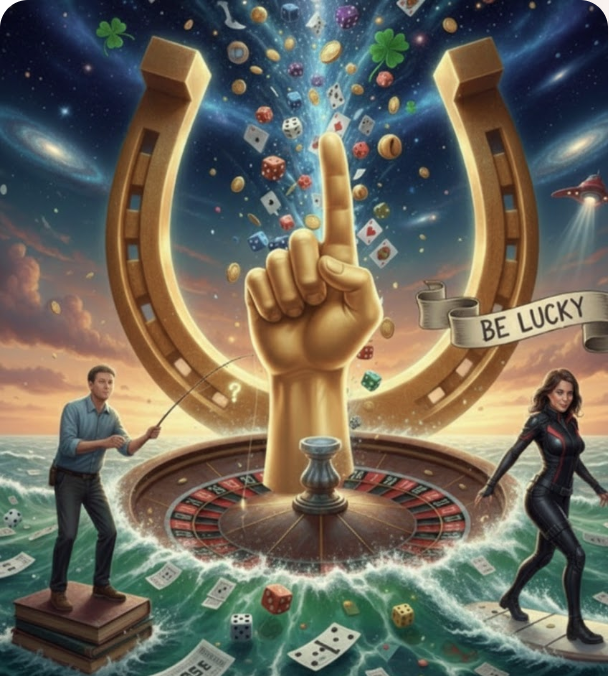
Luck has always fascinated me. Not because I believe in divine providence or cosmic design — I don’t — but because of the way humans have tried to explain randomness through stories, rituals, and even gods. From sitcoms like Only Fools and Horses urging us to “Be Lucky,” to scifi comedies like Red Dwarf, where fortune spreads like a virus, pop culture constantly reminds us that luck is both absurd and alluring. Inspector Clouseau survives on dumb luck, Earl Hickey from the TV show My Name Is Earl tries to balance his karma after winning the lottery, and Domino in Deadpool 2 turns chance into a superpower.
Beyond the screen, ancient religions personified luck as flawed deities — Tyche spinning her wheel in Greece, Fortuna guiding Rome’s fate, Lakshmi blessing prosperity in Hinduism, or Fu Lu Shou embodying happiness, wealth, and longevity in Chinese tradition. Even as an atheist, I find these myths compelling, because they show how deeply humans have needed to make sense of chance. Luck, whether divine or random, has always been a way of telling ourselves that chaos has meaning.
1998 (Cornwall)
When I finished my A Levels, I thought I had my life neatly mapped out: History for Education, a sensible path, a respectable career. Then the government, in its infinite wisdom, decided to shuffle the deck. Suddenly, my chosen course was off the table. At first, I felt like Del Boy in Only Fools and Horses — forever chasing a dream that slips just out of reach. But in true sitcom fashion, the setback opened a door, I hadn’t even noticed: a joint degree in History and Computer Science. Computer Science! A subject I’d never considered, yet one that became a passion. It was as if Tyche herself had spun her wheel and landed me on a jackpot square I didn’t even know existed.
1999 (Cheshire)
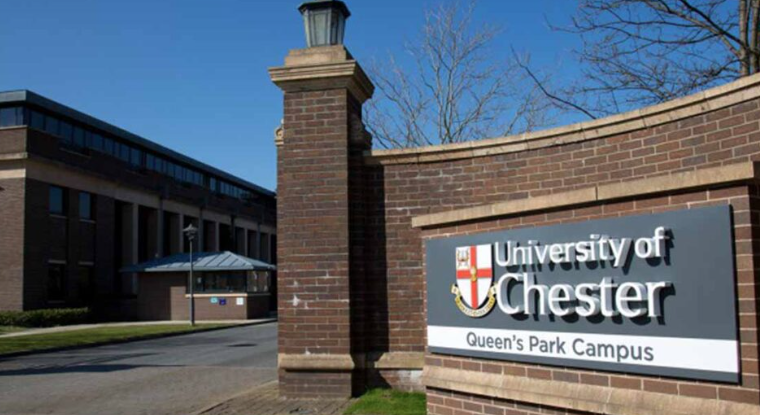
University, however, was less a jackpot and more a comedy of errors. My first year was promising — I was practically on speaking terms with Saraswati, goddess of learning. But by the second year, Bacchus had moved in, and let’s just say he was a very persuasive roommate. Nights blurred into mornings, lectures blurred into hangovers, and my academic focus blurred into oblivion. Like Shakespeare’s Romeo crying “I am fortune’s fool!”, I stumbled through chaos and somehow emerged with a Diploma in Higher Education. Either way, I left with qualifications I hadn’t entirely earned but was more than happy to accept — a classic case of dumb luck, the kind that would make even Frank Spencer from Some Mothers Do ’Ave ’Em proud, bumbling through disaster only to land on his feet with a grin and a shrug.
2001 (Hampshire)
Moving to Southampton was my next adventure, though “adventure” might be too glamorous a word for sitting around trying to figure out how to adult. At first, I had all the motivation of a cat in a sunbeam. But eventually, the looming spectre of rent and bills forced me into action. And then, in true My Name is Earl fashion, karma or fortune intervened. A chance conversation — the right words at the right time — landed me my first fulltime job.
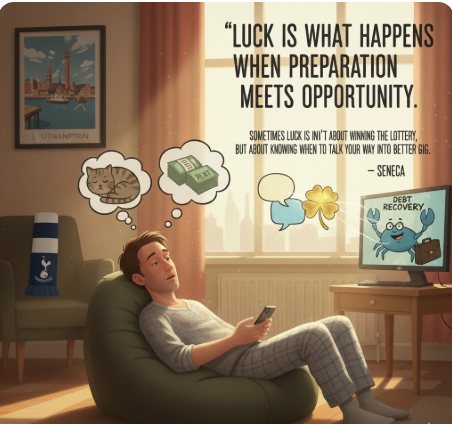
Seneca once said, “Luck is what happens when preparation meets opportunity,” and that was exactly my experience. Within months, I’d wriggled my way out of grunt work and into debt recovery, proving that sometimes luck isn’t about winning the lottery, but about knowing when to talk your way into a better gig.
2002 (Hampshire to Devon)
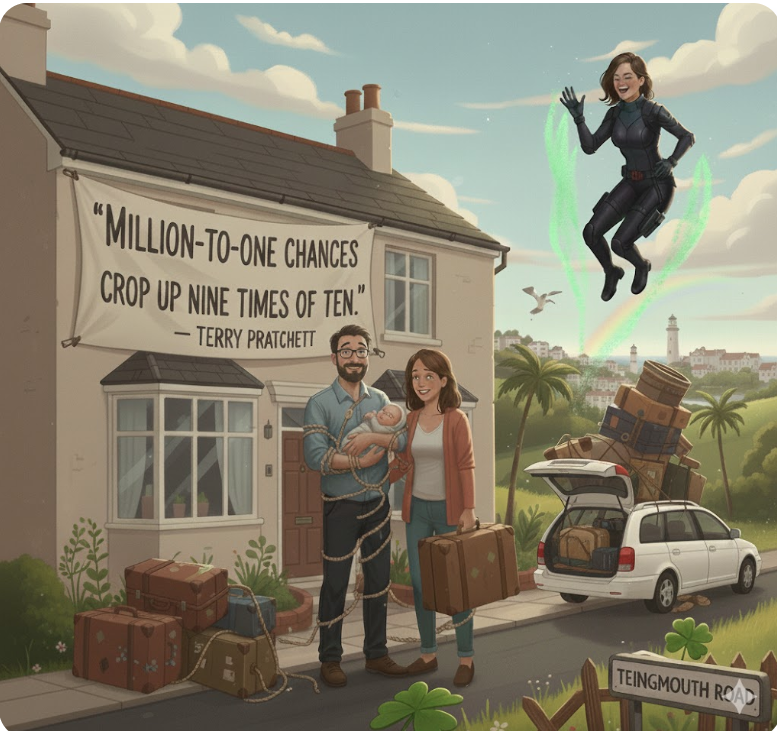
Then came the plot twist: fatherhood at 22. Equal parts exhilarating and terrifying, it felt like being handed a baby and told, “Good luck, don’t break it.” Just as I was getting used to keeping myself alive, I now had to keep someone else alive too. Fortunately, both my partner and I had employers willing to transfer us anywhere in the country. Cue the Domino from Deadpool 2 moment: improbably good fortune disguised as bureaucracy. We set off to Devon, armed with optimism and a weekend B&B booking, only to discover that the properties within our budget were… let’s say “character-building.” Yet, against all odds, we stumbled upon a house with just enough promise to call home.
Terry Pratchett once joked, “Milliontoone chances crop up nine times out of ten,” [fourth Discworld novel, Mort (1987)]; and that’s exactly how it felt. It wasn’t perfect, but like Inspector Clouseau, surviving another case, we somehow made it work. Luck, once again, had nudged us forward — not with grandeur, but with just enough absurdity to keep the story interesting.
The Noughties to Now
In the end, luck is neither a virus nor a god, neither karma nor a superpower. It’s the name we give to the unpredictable intersections of choice, chance, and circumstance. Ernest Hemingway wrote, “It is better to be lucky, but, I would rather be exact". [The Old Man and the Sea (1952)]; then, when luck comes you are ready.” That line resonates with me: luck has shaped my path, but it was readiness — however chaotic — that allowed me to seize it.
Perhaps that’s the real lesson: luck is a mirror. It reflects our hopes, our fears, and our need to believe that the universe isn’t entirely indifferent. Whether we laugh with Clouseau, spin Fortuna’s wheel, or watch Domino bend probability to her will, we’re really telling stories about ourselves — about the fragile balance between control and chaos. And maybe, just maybe, acknowledging that balance is the luckiest insight of all.
Thank you for that wonderful exploration of chance, choice, and circumstance. It's a great reminder that even atheists and pragmatists can appreciate the myths of Fortuna and Tyche—because they make us feel less alone in the chaos. My guest speaker has given brilliant depictions of what could be considered to be luck, chance or Karma which he says mirror our own lives. That is, sometimes we just stumble into success, sometimes we chase it, and sometimes we wonder if it’s chasing us. This week for me, HMRC gave me a tax rebate! Maybe they were feeling guilty and well that lottery win, I was telling you about “Good news Vincent, you've won a prize in one of our draw games on Friday 28 Nov 2025!” One day, bruv, we will be millionaires, but….
Not today punk! - You've won £3.20 - more noughts please!
POEM
The world spins by, a wheel of sudden chance,
Where tales of the unexpected may advance.
A throw of the dice; the odds appear wild,
From Cornwall's start to Devon's precious child.
No sacred map to clearly be my guide,
I learned to pick myself up, no place to hide.
"Instant Karma's gonna get you," Lennon said,
And nothing ventured means nothing gained instead.
Like Clouseau, I found a golden moment's grace,
But faced misfortune with a clumsy, worried pace:
From dizzy heights to falling off a log,
"Ouch, he bit me!" Then, "Sir, that's not my dog!"
The comedy of fortune plays upon the scene,
And action proves the luck is ultimately serene.
So I say, "Be ready" when fortune starts to call,
To seize the moment before Domino’s fall!