Chapter 1
Why the UK Cares About What You Export
I have been working in areas of business that have strong “compliance” requirements most of my life and have discovered that so many people working in these fields are unsure, intimidated and ill-prepared when it comes to preparing for audits, even though they all know their subject. Yet most of the work for compliance can be made simple if you are organised and you create a structured approach to the subject.
It helps to have knowledge of your chosen area of compliance and in this first blog article I will focus on exporting, a subject I have been intimately involved with since 2004.
Having worked with the Department of Trade and Industry and visiting companies in my position as an export advisory member of the Ministry of Defence, between 2004 and 2005, there were obvious signs that people were ill-prepared to demonstrate compliance, giving any auditor a wealth of pick up points which massively increase the export manager’s workload after the visit.
The effort that the manager puts into prepare for the visit was wasted and the auditor’s post visit report to the Managing Director probably earned the manager no favours. The company credence was tarnished, not only internally, through the findings of the report, but also by losing “trust” within the licensing community because the company was seen as a burden. A non-compliant company becomes a “watched” entity and in some cases non-compliance can lead to revocation of licenses, which leads to loss of contracts and in the extreme cases fines and prison sentences.
The latter extremes are a reality as a country’s export regime requires non-compliance to be taken seriously and the level of fines levied reflect that.
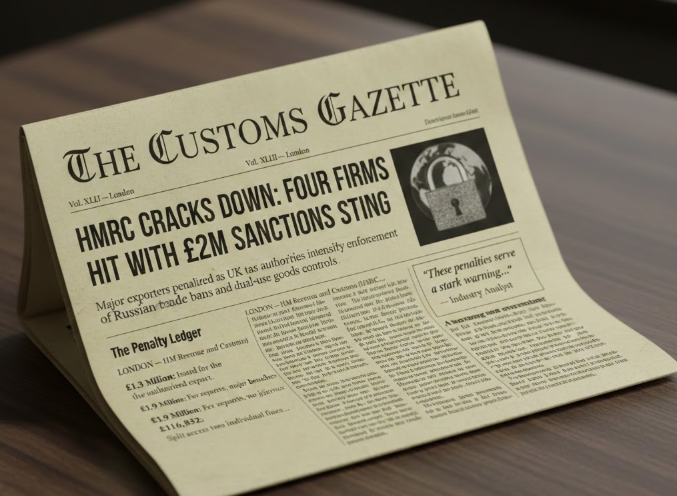
Whilst good companies applying extreme diligence in the area of export excellence are in the majority, there are others who are fearful and uncomfortable with the rigours of export licensing. They follow the “safe” route of asking the authorities at every juncture, perhaps opting for individual licenses, so that they can be ‘guided’ through the processing of the application by the limited resources of the Government licensing experts. These government experts will give the advice, but this takes time and money which can lose you contracts as the export clock ticks away. Invariably, the license time to approval can take twice as long if there is a constant back and forth flow of questions week on week.
ABOUT THIS TRAINING
Getting it right first time and putting export controls compliance measures in place from the outset is the only way of becoming comfortable with managing the licensing process and having clear, auditable processes and procedures. Preparing yourself and your company for the annual audit (in the UK), is not just about the few weeks before, hurrying around the paper pile and checking that everything you have in relation to what you have shipped over the last 12 months is now accurate and has all the associated paperwork with the shipping file. It’s about completing the file on the day you shipped the article and checking that the export license is correct for THAT shipment. It’s about making sure that the export authorisation carries the right information so that your shipper can have confidence in you, that your part of the supply chain is correct and compliant and that you also understand his compliance needs.
This "bitesize blog" from my new book aims to inform how to achieve “best practices” for strategic export compliance in the UK. It will focus on exporting strategic goods; this means those that appear on the United Kingdom’s Military and Dual Use Lists. Current Military and Dual Use listings can be found at the Business Innovation and Skills website, which at the time of writing is:


If you are thinking about getting more knowledge or starting out and of course get some time outside of these blogs and your own 24-7 work/life balance, take a look over the ECJU's webinars - they will help and assist the understanding of what's to come if you take up this bitesize challenge.
This blog and my forthcoming book will not teach you how to be compliant in your field of technology, but it will attempt to educate you if you chose to become an export manager. To wrap things up, choosing a career in export management isn’t just about avoiding the "stick" of HMRC fines; it’s about the "carrot" of a highly specialised and rewarding career path. As international trade becomes more complex due to shifting sanctions and digital trade laws, the demand for experts who can navigate these waters has never been higher.
Here is a breakdown from what you can expect to earn and how your career might progress in this field.
Entry Level -Starting £35,000 up to £40,000
Mid-Career£45,000 – £58,000£48,000 – £65,000
Senior/Head of £65,000 – £95,000+£75,000 – £120,000+
In high-stakes sectors like Aerospace, Defence, or Pharmaceuticals, senior Trade Compliance Directors in London or major hubs can see total compensation packages exceeding £130,000, especially when bonuses are factored in.
Why this field is growing
- The "Compliance Premium": Following the £2 million fines mentioned above, companies are now willing to pay a premium for managers who can guarantee they won't end up in the headlines for the wrong reasons.
- Geopolitical Complexity: With the frequent update of Russian sanctions and post-Brexit trade adjustments, "Export Manager" has shifted from a back-office administrative role to a strategic, boardroom-level position.
- Global Mobility: These skills are highly transferable. A deep understanding of Incoterms, dual-use goods, and tariff codes is a "global language" that can take you to offices in Singapore, Dubai, or New York.
Your Career Trajectory
Export Coordinator: Learning the ropes of documentation, shipping, and letters of credit.
Export Manager: Taking ownership of specific territories and managing regional compliance risk.
Global Trade Director: Setting the strategy for a company's entire international footprint and interfacing with government regulators.
Getting Some Qualifications

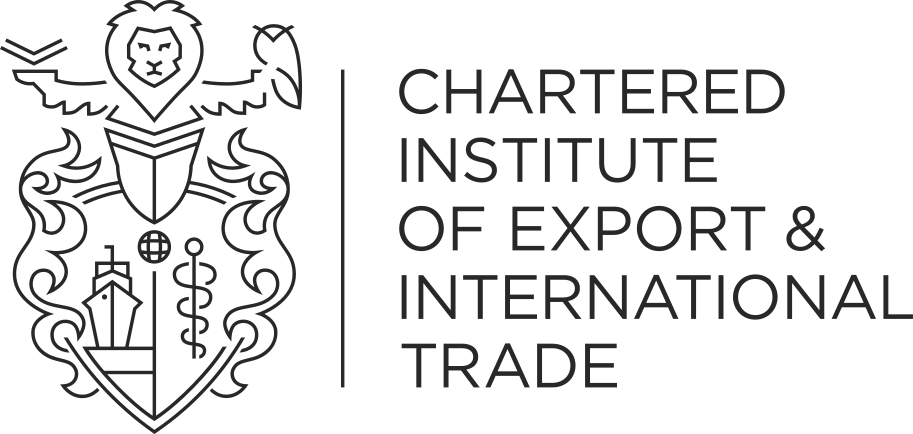
If the link does not work simply google them😄
I started with the Institute of Export in 2008 and become an Associate Member. One pays a membership fee and has a sponsor. Since then, I have become a full Member and now am a Fellow of the "Chartered Institute of Export and can display my badge on my e-mails or my CV.
The facts are that industry does not have a raft of trained export managers coming into the industry, but rather, they tend to be assigned from commercial, purchasing or shipping to run what is, in all practical terms, one of the "life-bloods" of the company.
Should the export manager fail to perform, then the ability of the company to continue to trade and compete in their business arena may be severely compromised. It is therefore in the interest of any company to ensure Export Management is placed alongside other prime business compliance “must haves” - the ISO 9001 Quality excellence; the Health and Safety Policy; the ISO27001 Security Policy. Failure in any of these areas can cause a company to lose its credibility in the market place and in consequence, its ability to trade. Loss of ISO 9001 means that the company has lost its quality stamp; loss of ISO27001 would lead to distrust from customers, especially if they are relying on you to handle their data. It is hard to place a value on that loss of faith and integrity as contracts are won and lost on this issue.
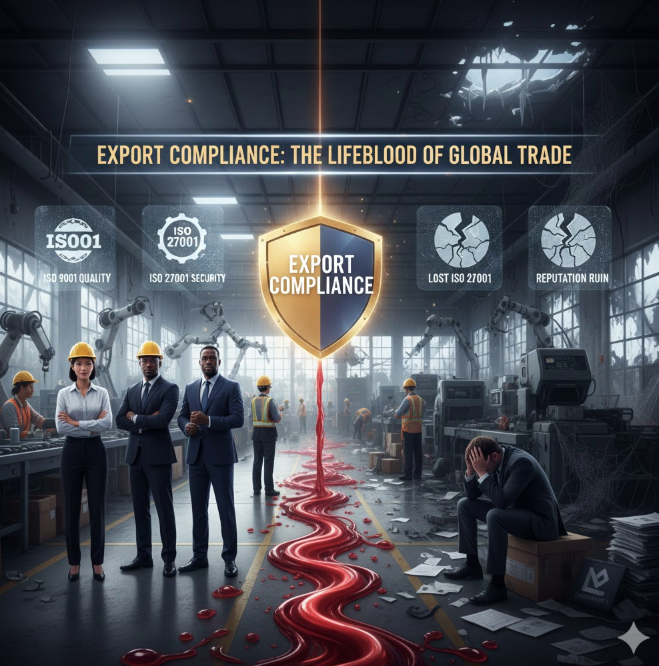
To round off this blog, it is crucial to understand the "administrative nightmare" that occurs when a company loses its trust with regulators.
When a firm is hit with the fines we discussed above, they often lose their "Open" licensing privileges. Moving from an Open Individual Export Licence (OIEL pronounced OIL) or the "privileged" Open General Export Licence (OGEL pronounced OJEL) to a Standard Individual Export Licence (SIEL pronounced SEAL ) is like moving from a fast-track security pass to a manual search for every single item you carry, you will also receive a "Warning Letter" for your sins.
The Bureaucratic Burden: OIEL vs. SIEL
Loss of the rights of Open Export Licensing (OILs and OJELs) will place a massive time and resource burden on the company. Under a SIEL, the company is required to apply for a specific license for every single shipment, customer, and destination.
The export licensing community will stringently vet the company for each individual application. As an export manager, you become unable to accurately advise the business on lead times because you are at the mercy of the processing queue. Those with privileges register and manage their applications via the Export Control Joint Unit (ECJU) digital systems.
Key Industry Systems & Acronyms
If you are thinking of entering this field, these two names will become the centre of your universe:
SPIRE (Shared Primary Information Resource Environment): This is the current online export licensing system used by the UK government. It is the portal where you submit applications, track status, and appeal decisions.
LITE (Licensing for International Trade and Enterprise): This is the modern successor to SPIRE. The ECJU is currently transitioning users to LITE to make the process more streamlined, transparent, and digital-first.
Final Word: The Export Manager's Value
The true "earning power" of a professional in this field comes from preventing the transition from LITE back to the heavy, manual scrutiny of a company under investigation. By maintaining the integrity of the SPIRE account and keeping Open Licensing active, you aren't just an administrator—you are the guardian of the company’s supply chain fluidly.
I hope that this little flutter has been an interesting read and for those who might think about starting a professional career I hope it helps you achieve best practices in export compliance. It is, I hope, a logical piece of work which will enable those people who want to become export managers, to adopt the practices that will prepare your workplace for a UK Export Compliance audit.
If you liked this, blog, my name is Vincent Taylor; if not, call me D. J. Trump. I’ll leave you with this: being an Export Manager is 10% knowing the law and 90% explaining to the Sales Team why they can't just 'pop the prototype in their suitcase' for a weekend trip to a restricted destination. See you in the book!